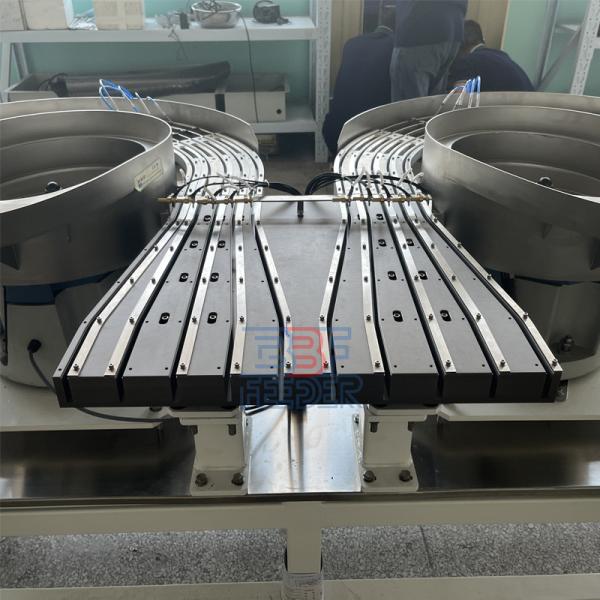
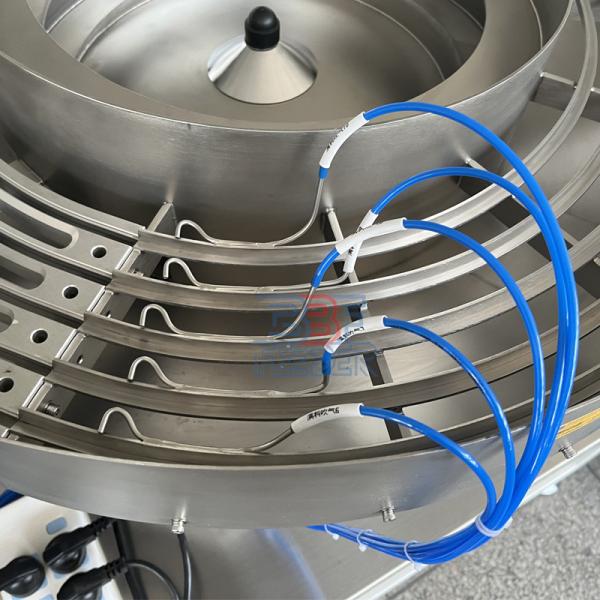
Multi-Lane Vibratory Bowl Feeder Plastic Parts Vibrating Bowl
Feeding System
1 . Descriptions:
Vibratory bowl feeders are crucial components in various
industries, offering a dependable and efficient method for sorting
and orienting parts. This article explores the essential steps and
considerations involved in the design of vibratory bowl feeders.
Step 1: Understanding the Components
Before diving into the design process, it is vital to grasp the
fundamental components of a vibratory bowl feeder:
Bowl: Typically made of stainless steel, the bowl acts as a
receptacle for the parts. It features a helical track or multiple
tracks that guide and orient the parts.
Drive Unit: The drive unit consists of an electromagnetic coil and
a spring system, generating vibrations that propel the movement of
the parts.
Controller: The controller regulates the frequency and amplitude of
the vibrations, providing precise control over the feeding process.
Step 2: Determining Part Characteristics
To design an efficient vibratory bowl feeder, a thorough
understanding of the part characteristics is essential. Consider
the following aspects:
Size and Shape: Irregularly shaped or sized parts may require
special considerations in the bowl design to ensure accurate
orientation.
Material: Different materials exhibit varying friction coefficients
and respond differently to vibrations, affecting the movement and
alignment of parts within the bowl.
Weight: The weight of the parts determines the required intensity
of vibrations. Heavier parts necessitate more powerful movements,
while lighter parts require gentler motions.
Step 3: Selecting Bowl Geometry
The bowl's geometry plays a critical role in the design process.
Take into account the following factors:
Bowl Shape and Size: Optimal performance relies on selecting the
appropriate bowl shape and size. The bowl's shape should align with
the parts being fed, ensuring a smooth and consistent flow.
Additionally, consider the bowl's size in relation to the
dimensions of the parts to avoid inefficient feeding or jams.
Track Configuration: Determine the number and arrangement of tracks
within the bowl based on the desired orientation and feeding rate.
Slope Angle: The angle of the bowl's slopes influences the movement
of the parts. Steeper slopes may be necessary to achieve faster
feeding rates.
Track Width and Depth: Choose dimensions that accommodate the part
size while preventing jams or clogs.
Designing a vibratory bowl feeder requires careful consideration of
the components, part characteristics, and bowl geometry. By
following the outlined key steps in this article, one can ensure
the feeder's effectiveness and efficiency in sorting and aligning
parts for subsequent processing or assembly.
2 . Specifications:
| Product name | Vibratory Bowl Feeder |
| Material | Aluminum(AL7075), Stainless Steel(SUS304) or Based on Customers'
Requirements |
| Controller | CUH,Sanki,Sinfonia,REO,Afag |
| Voltage | 220V 50HZ/110V 60Hz or Based on Customers' Requirements |
| Power | 300W/500W/1000W/1500W/2000W |
Bowl Finishing | Polishing or PU Coating |
| Speed | Based on Customers Requirements |
| Warranty | 2 Years |
| Certification | CE, ISO9001, ROHS |
| Lead Time | 3 Working Weeks |
3 . Designing an Efficient Vibratory Bowl Feeder:
Vibratory bowl feeders play a vital role in sorting and orienting
parts across industries. This article presents the essential steps
involved in designing these feeders and emphasizes important
considerations at each stage.
Step 1: Components Understanding
Gain a comprehensive understanding of the fundamental components:
bowl, drive unit, and controller.
The bowl acts as a receptacle with tracks to guide and orient parts
effectively.
The drive unit generates vibrations, while the controller regulates
the frequency and amplitude of these vibrations.
Step 2: Part Characteristics Determination
Take into account various part characteristics, including size,
shape, material, and weight.
Irregularly shaped parts may necessitate specific considerations in
bowl design to ensure accurate orientation.
Consider the friction coefficients of different materials and their
response to vibrations, as they impact part movement and alignment.
Step 3: Bowl Geometry Selection
Choose the optimal bowl shape and size for optimal performance.
Ensure alignment between the bowl and the parts, facilitating a
smooth and consistent flow.
Determine the track configuration, slope angle, and dimensions to
prevent jams and ensure efficient feeding.
Step 4: Base Unit Design
The base unit houses electromagnetic coils and generates the
necessary vibrations.
Select the appropriate drive unit type (half-wave, full-wave, or
high-speed) based on specific application requirements.
Choose a spring system that balances the force generated by the
coils, ensuring stable and reliable vibration.
Step 5: Controls Implementation
Implement a control system to regulate the frequency and amplitude
of the vibrations.
Ensure the control system has variable settings to accommodate
different parts and feeding requirements.
Consider incorporating feedback mechanisms, such as sensors or
monitoring systems, for real-time adjustments.
Step 6: Testing and Optimization
Thoroughly test the performance of the feeder against the desired
specifications.
Fine-tune parameters, including vibration settings and track
geometry, to achieve optimal feeding.
Conduct stress testing to evaluate the feeder's performance under
varying loads and conditions.
Designing a vibratory bowl feeder involves understanding part
characteristics, selecting appropriate bowl geometry, designing the
base unit, implementing controls, and conducting testing and
optimization. By following these steps and maintaining continuous
monitoring and maintenance, a highly efficient and reliable feeder
can be developed to meet the specific needs of any application.
4 . More Pictures: